

Bite an American gummy bear and a British wine gum back to back and the
difference is immediate. One yields and springs; the other resists and then
gives. People usually describe this as "chewier," which is true but explains
nothing.
The actual variable is which gelling agent the sweet is built on — and Europe
and the US lean on different ones.
The three gelling agents, and what each one feels like
Gelatin produces the classic elastic chew: springy, melts at body
temperature, releases flavour gradually as it warms in the mouth. This is the
American gummy bear default and much of the UK market too.
Starch gives a shorter, denser, more "pasty" bite that breaks rather than
stretches. Wine gums and many traditional British sweets sit here. Starch
also holds flavour differently — it releases more slowly, which is why a wine
gum keeps tasting of something long after a gelatin gummy has gone.
Pectin, from fruit, sets firmer and cleaner, with a short bite and no
elasticity at all. It melts less readily, so it tastes brighter and more acid
— pectin is why many European fruit jellies taste sharper than they smell.
None of these is better. They are different mouthfeels, and a lot of the
"imported sweets taste different" reaction is really a reaction to this.
Why the same brand tastes different across the Atlantic
Two reasons, and neither is a conspiracy:
long been stricter about certain synthetic colours, so exported versions
are often reformulated with fruit and vegetable concentrates. Those carry
their own faint flavours, which shifts the whole profile.
the boil and set slightly differently in the final sweet.
The result is a product with the same name and a genuinely different texture
and taste. Not nostalgia. Not imagination.
Aeration: the underrated variable
Some European chews are whipped before setting, folding air through the
mixture. That lightens the density and makes the sweet dissolve faster
without making it softer to the bite — a combination that is hard to achieve
any other way.
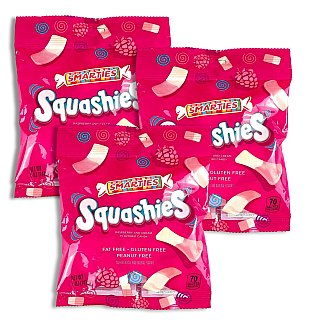
Swizzels Squashies are the clearest example on our shelf (we explore the craze in our Swizzels Squashies Guide). They are noticeably
lighter in the hand than their size suggests, and they compress rather than
stretch:

For a direct comparison, the Smarties version uses the same idea at a
different density:
How to taste texture properly
If you actually want to tell these apart rather than just enjoy them:
Room temperature, always. Cold stiffens gelatin and flattens aroma.
A gummy straight from a cold room tastes of almost nothing.
Press before you chew. Squeeze the sweet between your fingers. Elastic
and springs back — gelatin. Yields and stays dented — starch or aerated.
Snaps — pectin.
Count your chews. Genuinely. Gelatin gummies typically break down over
more chews than starch-based ones, which go from firm to gone quite
abruptly.
Clear your palate with water, not another sweet. Sugar coats, and the
second sample always reads flatter than it is.
What this means when you are buying
If you have tried imported sweets and found them oddly firm or oddly
short-textured, you were not imagining it, and you are probably reacting to
starch or pectin rather than to the flavour.
The practical advice: if you like a long, springy chew, stay with
gelatin-based sweets. If you want something that releases flavour slowly and
resists at first, the traditional British starch-set sweets are the ones to
try — and they are worth trying before you decide the category is not for you.
Featured Products in This Article
Taste the snacks discussed above, shipped fast directly from our NY warehouse!

