

British sweet culture is not really about the sweets. It is about how they
were sold — loose, by weight, chosen one at a time by a child with very little
money — and almost everything distinctive about the category traces back to
that.
(We have written separately about how UK and US sweets differ in texture and
flavour. This is about the shop.)
Pick and mix, and why it produced so many shapes
If sweets are sold loose and priced by weight, variety costs the shopkeeper
almost nothing and is the entire appeal to the customer. That single fact
produced a confectionery industry organised around having hundreds of
different small things rather than a dozen large branded ones.
It also explains the shapes. Sweets designed to be chosen individually from a
jar need to be visually distinguishable at a glance — which is why British
sweets skew toward strong colours, odd forms and names describing appearance
rather than flavour.
The penny sweet, and what it did to portion size
For decades a child could buy a genuinely small quantity of sweets. Not a bar,
not a bag — a few pieces.
That set an expectation that persists: British sweets are typically sold in
smaller units than American equivalents, and individual pieces are smaller.
A bag that looks meagre to an American shopper is a normal size in a British
shop.
It also produced a category that Americans find slightly baffling: sweets sold
as a handful of tiny things rather than as a single satisfying object.
Why the flavours are what they are
Three that define the shelf and barely exist in America:
Blackcurrant. The default British berry flavour, largely because
blackcurrant cordial was promoted heavily during the twentieth century as a
vitamin C source when citrus was scarce. A generation grew up on it and it
became the standard.
Liquorice. Divides opinion everywhere but survived in Britain as a
mainstream flavour rather than a niche one.
Rhubarb and custard, pear drop, sherbet lemon. Flavours named after
puddings and fruits rather than after fruit alone — a sweet imitating a
dessert rather than an ingredient.
The move to bags
Loose sweets have largely given way to sealed bags, for reasons that have
nothing to do with taste: hygiene expectations, labelling requirements,
shelf-life control, and the cost of staff weighing things out.
Something real was lost — the choosing was most of the pleasure — and
something real was gained, since a sealed bag is fresher than a jar that has
been open for a fortnight.
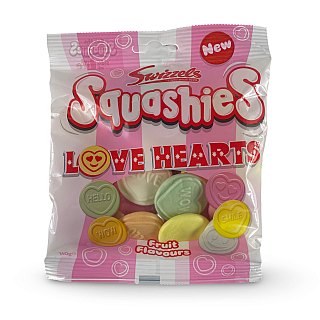
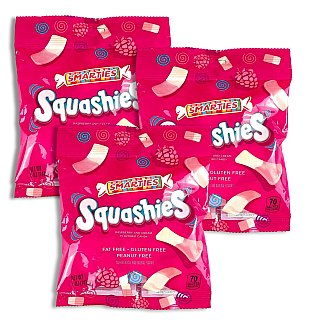
The modern compromise is the multi-pack of small bags, which preserves variety
while keeping everything sealed:
What this means for buying imported
Expect small. A 100 g bag is standard, not stingy.
Expect variety over volume. The category rewards trying six things once,
not one thing six times.
Expect flavours named after puddings. If a name describes a dessert
rather than a fruit, it is usually a good sign — those are the ones with a
century of iteration behind them.
Do not expect chocolate to travel well. British chocolate is formulated
for a cooler climate and a shorter supply chain, and it is the category most
likely to disappoint after a long journey.
The sweets are worth trying. But the thing worth understanding is that they
were designed for a shop that mostly no longer exists, which is why they feel
slightly out of step with a modern aisle — and why they are so specific.
Featured Products in This Article
Taste the snacks discussed above, shipped fast directly from our NY warehouse!

