

East Asian snacks are the fastest-growing corner of most import shelves, and
also the one people find hardest to buy from, because the packaging gives an
English speaker very little to go on.
Here is a map of the categories rather than a list of products.
Texture is the organising principle
The single most useful thing to understand: Japanese and Korean snacks are
often built around texture first and flavour second, which is close to the
reverse of the American default.
That is why a snack can be described as "crispy layered" or "soft chewy" on
the front of the pack with the flavour almost as an afterthought. It is not
poor translation. It is the category description.
Layered crisp — thin sheets built up and fried or baked, so they shatter
in stages rather than all at once.
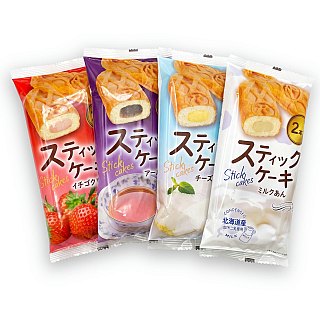
Soft cake — sponge, often individually wrapped, noticeably less sweet than
an American equivalent and much moister.
Coated — a nut or puff with a flavoured shell, where the shell is the
product and the centre is the vehicle.
Sweetness runs lower
This is the most common surprise and the most common complaint, and it is
worth knowing before you buy rather than after.
Japanese and Korean sweet snacks are typically considerably less sweet than
American ones. A soft cake that would carry a heavy frosting here is more
likely to be lightly sweetened sponge with a thin filling.
If you find American snack cakes cloying, this is the shelf for you. If you
want intense sweetness, you will find these underwhelming and it is not a
quality issue.
Savoury goes places American snacks do not
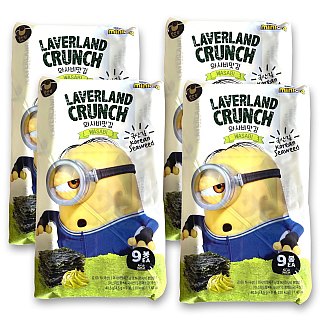
Seaweed is the clearest example. Roasted seaweed snacks are salty, faintly
oceanic, extremely light, and completely unlike anything in a Western crisp
aisle. They are also the one most likely to divide a household.
Corn, wasabi, and roasted grain flavours are common and worth trying with an
open mind — wasabi in particular is usually far milder in snack form than the
name suggests, closer to a sharp mustard heat that clears quickly.
Heat, and the honest warning
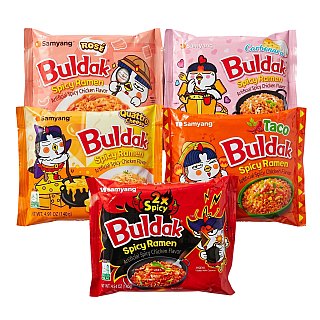
Korean spicy snacks are genuinely hot, and the packaging understates it by
Western convention. The ramen category in particular has heat levels that are
a challenge product rather than a meal.
If you are buying for someone who says they like spicy food, believe them but
start one level below whatever seems obvious. This is the single most common
mis-purchase in the category.
How to start
Buy a variety pack rather than a full-size unknown. The hit rate on
unfamiliar flavours is genuinely lower, and small formats keep that from
mattering.
Start with texture you already like. If you like wafers, start with
layered crisp. If you like sponge cake, start there.
Try one savoury and one sweet. People who bounce off the category
usually tried only one and generalised.
Read the pack for allergens carefully. Import labelling varies and
sesame in particular is far more common here than in Western snacks.
Storing them
Nothing unusual, with one exception: layered crisp snacks lose their texture
faster than dense ones, because there is more internal surface for moisture to
reach. Reseal properly and eat opened packs within a few days rather than
weeks.
Featured Products in This Article
Taste the snacks discussed above, shipped fast directly from our NY warehouse!

