

Kettle-cooked is not marketing. It describes a different frying method that
produces a measurably different chip, and once you know what changes you can
tell which is which blind.
Continuous frying versus batch frying
Standard chips are made continuously: slices ride through a fryer on a
belt at a steady, high temperature and emerge a fixed time later. Every chip
has the same short, uniform cook.
Kettle chips are cooked in batches. A quantity of slices goes into oil,
which drops the oil temperature sharply; the chips cook as the temperature
recovers, and they are stirred while it does.
That temperature drop is the whole difference.
What the temperature drop does
Longer cooking, lower peak. More moisture leaves the potato before the
surface sets, which produces a denser, harder chip rather than a light, airy
one.
More starch develops colour. Longer contact at moderate heat means more
browning, which is why kettle chips are unevenly coloured, with amber patches
and the occasional dark chip. Those are not burnt — they are the ones that
were at the bottom.
They fold and clump. Stirring during the cook means chips stick together
and set in curled shapes. A perfectly flat, uniform chip has almost certainly
not been batch-fried.
Why they hold up better under toppings
Density is the answer. A thin, airy chip has little structure and goes limp on
contact with anything moist. A kettle chip has more mass per square inch and
a harder set surface, so it survives dips, chocolate, cheese and sitting in a
bowl for an hour.
If you are building anything where the chip is a vehicle rather than the
snack, this matters more than flavour.
The trade-off nobody mentions
Kettle chips are harder work to eat. They are louder, they take more chewing,
and they are more likely to catch the roof of your mouth. In quantity that is
tiring in a way a light chip is not.
So the honest split: kettle for eating deliberately and for anything involving
a topping; standard for eating absent-mindedly through a film.
Three worth knowing
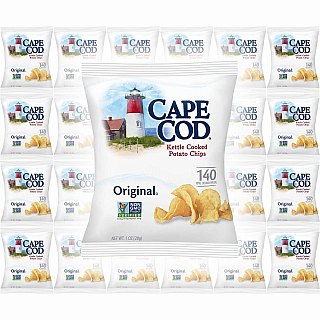
The plain original is the reference point — nothing to hide behind, and the
best way to taste what the method does:
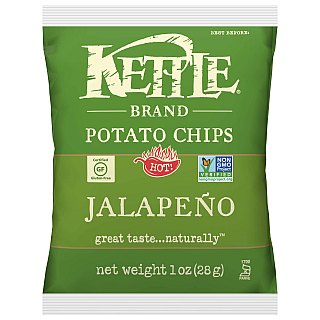
Heat behaves differently on a denser chip. It arrives later and lingers, so a
jalapeño kettle chip reads hotter over a handful than the same seasoning on a
thin chip:
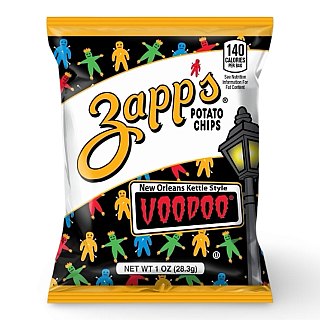
And a regional one, for anyone who thinks all kettle chips taste alike:
Storage, which matters more here
Kettle chips go stale by taking on moisture, and their density means they hold
it once they have it — a soft kettle chip is much less pleasant than a soft
thin one, because you are left with the toughness and none of the snap.
Seal properly, or decant. A rolled-over bag is not a seal.
A few minutes in a low oven genuinely restores them. Cool completely
before eating or they taste oily.
- Never the fridge. Cold air is damp air.
Featured Products in This Article
Taste the snacks discussed above, shipped fast directly from our NY warehouse!


