

The snack cake is a specific invention: a sweet baked good engineered to
survive transport, sit on a shelf for weeks, and be eaten without a plate.
None of that is how cake had worked before, and the constraints shaped
American eating in ways that are still visible.
(We compared two of them head to head separately — this is about how the
category came to exist at all.)
The problem it solved
Cake is fragile, perishable and needs cutting. For most of history that made
it a household or bakery product eaten near where it was made.
Three things changed in the early twentieth century: reliable commercial
baking at scale, cellophane and later plastic film, and a national rail and
road network. Together they made it possible to bake something in one place
and sell it, still acceptable, a thousand miles away a fortnight later.
The snack cake is what you get when you optimise cake for that journey.
The engineering, and why they taste the way they do
Every characteristic people criticise is a solution to a transport problem:
High sugar and fat. Both are preservatives. Sugar binds water so microbes
cannot use it; fat slows staling by interfering with starch recrystallisation.
A snack cake tastes rich because rich keeps.
Creme filling rather than dairy cream. Shelf-stable, does not separate,
does not require refrigeration. It is a different food from cream and it is
not pretending otherwise.
Individual wrapping. The moisture barrier that makes the shelf life real.
Dense, close crumb. Survives compression. An airy cake would arrive as
crumbs.
So the flavour profile of a snack cake is not a compromise on quality — it is
the direct consequence of a design brief. Whether you like the result is
another question.
The lunchbox, and what it did to portion size
The single-serve wrapped cake arrived alongside mass school lunch culture, and
the two reinforced each other. A wrapped cake was the first dessert that a
child could carry, unsupervised, without a container.
That fixed a portion size in the American imagination — the individual cake,
eaten alone, at a specific time of day — that persists across nearly every
sweet category now.
It also created the regional loyalties. Distribution was regional before it
was national, so which brand you grew up with was largely an accident of
geography, and those attachments have outlived the distribution patterns that
caused them by decades.
Why the category survived everything
Snack cakes have been declared finished many times. They persist for
unglamorous reasons: they are cheap, they keep, they need no preparation, they
travel, and they are strongly tied to childhood for several generations at
once.
That last one is the durable part. A product with fifty years of food memory
behind it has a floor under it that a new product does not.
What to notice next time
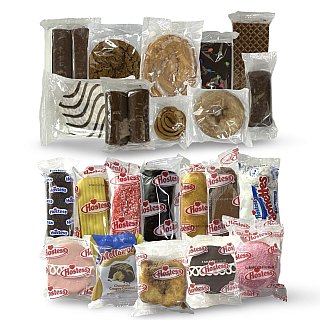
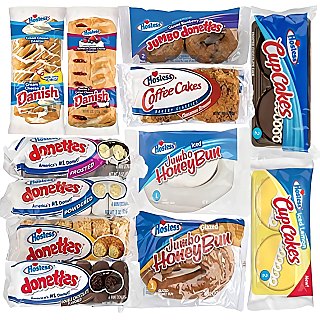
Look at one and read the engineering: the wrapper seal, the density of the
crumb, the filling that has not separated after weeks, the fact that it is
exactly one portion and needs nothing to eat it with.
It is a solved problem, sitting on a shelf, and it has been solved for so long
that almost nobody notices there was a problem.
Featured Products in This Article
Taste the snacks discussed above, shipped fast directly from our NY warehouse!


