

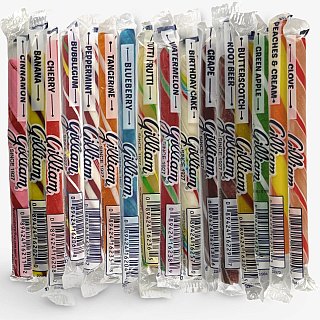
Sixteen flavours in one box is a lot to work through, and most people eat
three, decide they like peppermint, and leave the rest. Here is a way to
actually taste them — and a rough map of what you will find.
Read the stripe before you taste
Old-fashioned stick candy is made by pulling boiled sugar and folding coloured
sugar into the mass, then rolling it out. The stripes are structural, not
printed, which is why no two sticks are identical and why the colour runs all
the way through.
The colour is also your only clue to the flavour, since these are rarely
labelled individually. Broadly:
Red — cherry, cinnamon or strawberry. Cinnamon is the one that surprises
people; it is hot rather than sweet.
Green — lime, spearmint or sour apple.
Brown or amber — root beer, sassafras, butterscotch, horehound. This is
the interesting corner of the box.
Clear or white — peppermint, wintergreen, anise.
Yellow and orange — lemon, banana, orange.
The four you will not recognise
Most 16-flavour boxes carry at least a few that have disappeared from the
mainstream. These are the reason to buy a variety pack rather than a bag of
one thing.
Horehound — bitter, herbal, faintly medicinal. It is made from a mint-family
plant and was sold for sore throats long before it was sold as a sweet. Almost
nobody likes it on the first try and a surprising number of people come back
to it.
Sassafras — the root beer note, but sharper and more floral than the soda.
Anise — liquorice-adjacent, though not the same thing. Divides rooms.
Wintergreen — related to mint but distinctly different: cooler, sharper,
and to American palates strongly associated with medicine.
How to taste sixteen without ruining your palate
Work light to dark. Lemon and orange first, mint in the middle, the
brown flavours last. Doing it the other way round means everything after
the cinnamon tastes of cinnamon.
Break, don't suck. Snap a small piece off. A whole stick takes several
minutes to reveal itself and you will not get through four, let alone
sixteen.
Water and a plain cracker between the strong ones. Cinnamon, anise and
horehound all linger.
Two sessions, not one. Palate fatigue on hard candy is fast. Eight is
about the honest limit.
Why they are shaped like that
The stick shape is a survival from when candy was sold loose from jars and cut
or snapped to order. Length made it easy to grip and to break to a price
rather than a weight.
It also does something useful the modern boiled sweet does not: a stick can be
used as a straw. Pushing a peppermint stick into a citrus fruit is a genuine
Southern tradition, and the candy slowly dissolves as you drink through it.
Keeping them
Hard candy's only enemy is humidity. Sugar is hygroscopic, so a stick left in
damp air goes tacky, then welds to its neighbours.
Airtight, room temperature, away from the kettle.
If they have fused, they are not spoiled — but there is no separating
them cleanly. Break the block and accept it.
Do not refrigerate. Taking cold candy into a warm room condenses water
onto the surface, which is exactly the thing to avoid.
Featured Products in This Article
Taste the snacks discussed above, shipped fast directly from our NY warehouse!

