

Office snacks fail in predictable ways. The same three things go untouched,
the good items vanish in a morning, and somebody eventually sends an email
about it. Nearly all of that is a stocking problem rather than a people
problem.
Stock for the shape of the day, not for variety
Office snacking is not evenly distributed. It clusters:
Mid-morning, around eleven — the largest spike, and mostly sweet.
Mid-afternoon, between two and four — the second spike, and the one
where people want something substantial rather than a treat.
Late afternoon on deadline days — unpredictable, high volume, and the
reason a well-stocked shelf empties overnight.
Stock for those three moments and the shelf works. Stock for "variety" and you
get eleven kinds of the same thing.
The four things a shelf needs
Something sweet and small. The mid-morning item. Individually wrapped,
low commitment, no plate.
Something savoury. Consistently the most under-stocked category in an
office, and the reason people leave the building at three o'clock.
Something substantial. A snack cake, a pastry, something with actual
calories in it for people who skipped lunch. This is what stops the shelf
being decorative.
Something with no sugar at all. Nuts, crackers, mints. There is always
someone, and providing nothing for them is conspicuous.
Why variety packs beat buying favourites
Buying more of what disappears fastest seems obvious and is usually wrong. The
popular item disappears fastest partly because it is the only good option,
and doubling it just means it disappears twice as fast while the rest still
sits there.
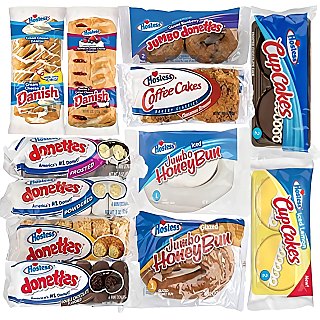
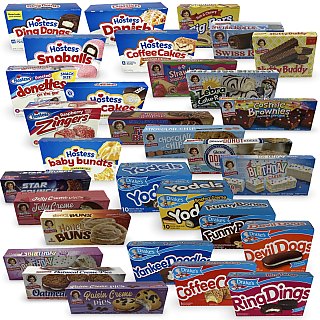
Variety packs solve the actual problem, which is that a shelf with six real
choices gets grazed evenly while a shelf with one good choice gets stripped.
The rules that stop the arguments
Individually wrapped, always. Shared bags in an office are a hygiene
conversation nobody wants to have, and an opened bag goes stale before it is
finished.
Put out less, more often. A full basket signals abundance and gets
cleared; a half-full basket refilled daily lasts twice as long for the same
spend.
Do not put the good thing at the front. Position genuinely changes what
gets taken. Rotate.
Label allergens or keep the outer packaging. In any office of reasonable
size this stops being optional.
Budgeting honestly
Per-head-per-week is the only figure that survives contact with reality, and
it is easier to defend than a monthly total. Work out what you spent last
month, divide by headcount and weeks, and adjust from there — your own
history beats any benchmark, because office snacking varies enormously with
whether people eat lunch at their desks.
Two costs people forget: the container and the person restocking it. A basket
nobody has been asked to refill is empty by week three regardless of budget.
What to stop buying
Anything requiring a bowl, a spoon or a fridge. It will not be eaten.
Large sharing bags. They go stale and cause the hygiene conversation.
Anything that melts, if the shelf is anywhere near a window.
- The thing you personally like that nobody has touched in a month. It is
Featured Products in This Article
Taste the snacks discussed above, shipped fast directly from our NY warehouse!

