

Almost everything people do to keep pastries fresh makes them worse, and the
single biggest culprit is the fridge. Understanding one process explains why.
Staling is not drying out
This is the misconception that causes most of the damage.
Bread and cake go stale through starch retrogradation — the starch
molecules, disordered by baking, gradually recrystallise into a firmer
structure. It is a physical reorganisation, and it happens whether or not
moisture is lost.
The critical fact: retrogradation is fastest just above freezing. A pastry
in the fridge stales several times faster than the same pastry on the counter.
So the fridge, which feels like preservation, is the worst place for a baked
good — and the freezer, which feels drastic, is genuinely excellent, because
below freezing the process nearly stops.
Room temperature, freezer, never the fridge
Room temperature for anything you will eat in one to three days. Airtight,
away from sunlight and away from the oven.
Freezer for anything longer. Wrap individually and tightly. Thaw still
wrapped, at room temperature, so condensation forms on the wrapping rather
than on the pastry.
Fridge only for pastries with a genuinely perishable filling — fresh cream,
custard, cream cheese. Here food safety beats texture, and you accept the
staling.
Airtight is not always right
One nuance that catches people out.
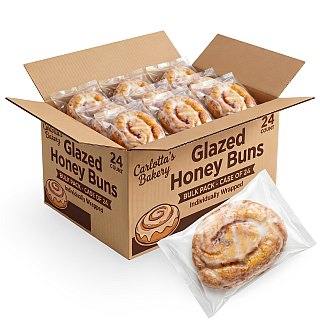
Soft pastries — honey buns, snack cakes, filled doughnuts — want airtight.
They have nothing crisp to protect and their enemy is moisture loss.
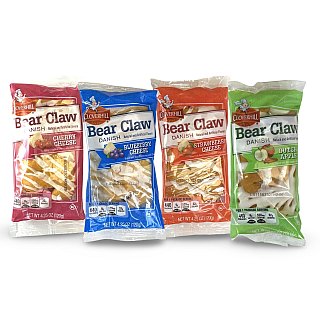
Crisp or laminated pastries — Danishes, bear claws, anything flaky — are
ruined by airtight containers, because their own moisture migrates outward and
softens the layers. A paper bag is better: it lets a little moisture escape
while keeping dust off.
Putting a Danish in a sealed box overnight is the reliable way to find a limp
pastry in the morning.
Reviving what has gone firm
Retrogradation is partly reversible with heat, which is why yesterday's pastry
warmed is so much better than yesterday's pastry cold.
Oven or toaster oven, a few minutes at moderate heat. This reverses
staling properly and re-crisps the outside.
Microwave, a few seconds only, for soft pastries. It works — but it also
drives moisture out, so the item goes noticeably harder within about ten
minutes of cooling. Microwave what you are about to eat, never a batch.
Never twice. Each cycle removes more moisture and the second attempt
gives you something tough.
Glaze and icing change the rules
A set glaze is a moisture seal, and it does real work — glazed items keep
their crumb softer for longer than unglazed equivalents.
But glaze also melts. Warming a glazed pastry too aggressively liquefies the
icing, which then sets grainy as it cools. Lower heat, less time.
The short version
Never the fridge.
Airtight for soft, paper for flaky.
Freeze what you will not eat in three days, and thaw it wrapped.
- Warm briefly, once, immediately before eating.
Four rules, and they cover nearly everything on a bakery shelf.
Featured Products in This Article
Taste the snacks discussed above, shipped fast directly from our NY warehouse!

