

The Pez dispenser is one of the few pieces of packaging that outgrew its
product. People collect the dispensers, display them, and trade them; the
candy is almost incidental. That is unusual, and it happened by accident.
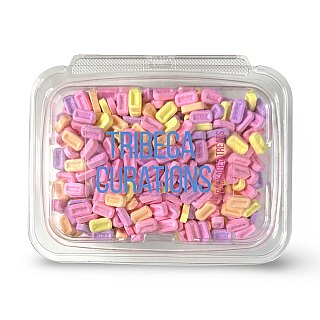
(For what the candy itself is like — particularly by the pound, without the
dispenser — we wrote about that separately.)
It started as an anti-smoking product
Pez was created in Austria in 1927 as a peppermint for adults. The name is a
contraction of Pfefferminz, the German for peppermint.
It was marketed at smokers as an alternative to a cigarette, and the earliest
dispensers were designed to support that idea: plain, rectangular, and held
and flicked in a way that deliberately echoed a lighter. There were no
character heads and no fruit flavours.
The American reinvention
The product arrived in the United States in the 1950s and did not sell. The
adult mint proposition did not translate.
The response was to change nearly everything except the mechanism: fruit
flavours instead of peppermint, and character heads on top of the dispenser
aimed at children rather than smokers.
That is the version everyone now thinks of as Pez, and it is a reinvention
rather than the original — which is worth knowing, because it explains why the
object feels slightly odd. It is a 1920s adult accessory with a cartoon head
attached.
Why the mechanism survived unchanged
The dispenser works by a simple spring-loaded stack: tilting the head back
lifts the top tablet clear and presents it. It is nearly a century old and has
barely been revised.
Two reasons it lasted. It is cheap — a few moulded parts and a spring — and it
does something no wrapper does, which is deliver exactly one piece at a time
without being opened. That portioning is why the format works for children and
why parents tolerate it.
Collecting, and what actually drives value
The dispensers became collectable for a reason that has little to do with
candy: they were produced in enormous variety, in limited runs, tied to
licences that expire. That is the same structure that makes trading cards
collectable.
If you are looking at a dispenser and wondering whether it is interesting:
the presence or absence of feet on the base is the usual first thing
collectors check, since that changed at a known point. Condition, completeness
and the licence involved do the rest.
We sell the candy rather than the dispensers, and we would rather point you at
a collector's guide than pretend otherwise.
The candy underneath
Worth saying plainly: the tablets are the same compressed sugar whether they
arrive in a dispenser or by the pound. If you like the ritual, the dispenser
is the product. If you like the sweet, the tub is considerably better value
and does not require you to load anything.
The wider point
Pez is one of the clearest examples of packaging becoming the brand. Nobody
collects the wrapper of a chocolate bar, but the dispenser was designed to be
handled repeatedly and kept — and objects that get handled and kept accumulate
attachment in a way disposable packaging never does.
Which is, in the end, the same reason nostalgic sweets work at all.
Featured Products in This Article
Taste the snacks discussed above, shipped fast directly from our NY warehouse!


