

Brownies divide people more sharply than almost any baked good, and the
argument is always the same one: fudgy or cakey. That is not a matter of
taste so much as a matter of ratio, and knowing which you like makes buying
them far easier.
Fudgy versus cakey is a fat-to-flour question
Fudgy brownies have more fat relative to flour and usually no chemical
leavening. Less flour means less gluten structure, so the result is dense,
moist and slightly under-set in the middle. The texture is closer to set
ganache than to cake.
Cakey brownies have more flour, often an added leavener, and more air
beaten in. They rise, they hold a crumb, and they eat like chocolate cake.
Neither is a mistake. But a fudgy brownie judged as a cake reads as
underbaked, and a cakey brownie judged as a brownie reads as dry — which is
most of the disagreement.
The crackly top, and how it happens
That thin, shiny, tissue-paper crust is not an ingredient. It forms when sugar
dissolves fully into the eggs and fat before baking and then re-crystallises at
the surface as it cooks.
The practical implication: it depends on technique rather than on a recipe
listing, so you cannot tell from an ingredients panel whether a brownie will
have one. You can tell by looking.
It is also fragile. A crackly top does not survive being wrapped warm, which
is why commercially packaged brownies rarely have a good one and freshly cut
ones do.
Why bite-sized changes the product
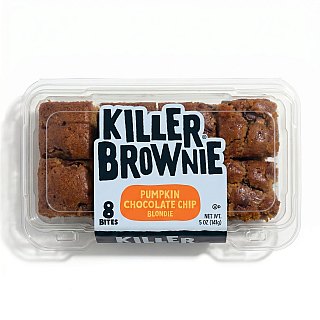
A small brownie is not simply a brownie divided. Cutting one into bites
multiplies the exposed surface, and the edges are structurally different from
the middle — firmer, chewier, more caramelised.
So a tray of bites is mostly edge. If you are an edge person that is an
improvement; if you eat brownies for the soft middle, a bite-sized format is
working against you.
Bites also stale faster, for the same reason: more surface, more moisture
loss.
Serving them properly
Room temperature, not cold. Fat is firm below room temperature, and a
fridge-cold brownie tastes of far less than the same brownie an hour later.
A few seconds of warmth transforms a fudgy brownie and does very little
for a cakey one. Worth knowing which you have before you bother.
Do not warm them with anything on top. Ice cream on a warm brownie is
excellent; ice cream on a brownie being* warmed is a puddle.
Storing them
Airtight at room temperature for a few days. Not the fridge — it dries them
out and firms the fat, and neither helps.
They freeze extremely well, better than most baked goods, because the high fat
content protects the texture through the freeze and thaw. Wrap individually,
thaw at room temperature still wrapped.
What to look for when buying
If you want fudgy: look for a dense, close texture and a slightly damp
appearance at the cut edge. If you want cakey: an open crumb and a domed top.
And if the pack shows a shiny crackled surface, that is at least evidence
somebody was paying attention to technique rather than only to the recipe.
Featured Products in This Article
Taste the snacks discussed above, shipped fast directly from our NY warehouse!


